Please visit the other 'Bricks' blogs:
ArtisticBricks ComicBricks ContestBricks DisneyBricks GodBricks
MicroBricks MinilandBricks SciBricks TolkienBricks VignetteBricks

Thursday, December 20, 2012

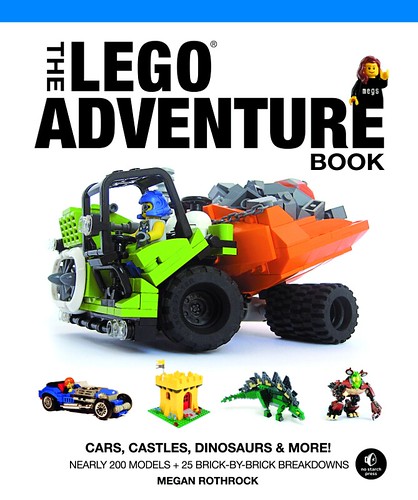
Book Review: The LEGO Adventure Book

Next up in my series of LEGO book reviews for your last minute gift needs.


LEGO Adventure Book: Cars, Castles, Dinosaurs & More, Megan Rothrock, 2013, No Starch Press.


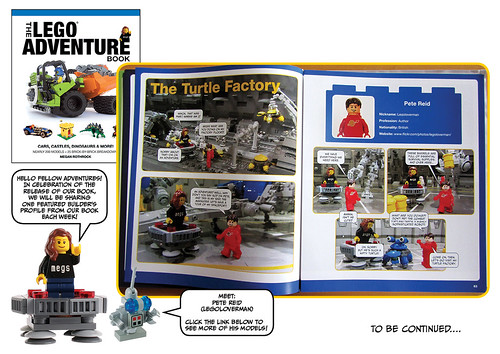
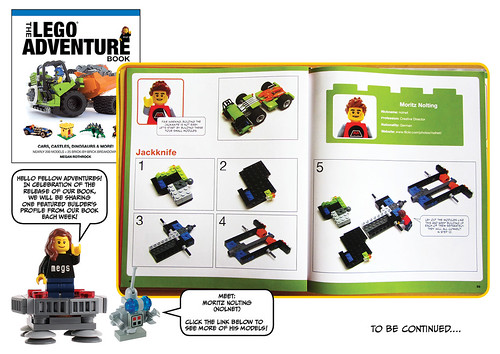
If you're only going to buy one LEGO book this year, this is the one to get. Editor Megan Rothrock is a well known member of the community, whose MOCs can be found on Flickr, and this book celebrates the community. Do you remember the LEGO Idea Books? Over the years LEGO released several of these booklets that went beyond the instruction sets found in any individual set. These books were a mix of instructions and just inspirational photos that could show you what you could build with enough time, practice, and, of course, more LEGO. Meg's book looks back to that tradition, and also celebrates the community.


The book is mostly photos (all high quality). What text there is is primarily in comic book style, as Meg's sig-fig travels through the world of LEGO, meeting the sig-figs of other prominent builders and seeing their MOCs. In addition to Meg herself, featured builders come from all different areas of the LEGO community, both geographically and in terms of building theme: Craig Mandeville, Are J. Heiseldal, Moritz Nolting, Jon Hall, Pete Reid, Peter Morris, Mark Stafford, Aaron Andrews, Mike Psiaki, Katie Walker, Carl Greatrix, Sylvain Amacher and Daniel August Krentz.


The book is 200 pages long and contains 'nearly 200 example models from the world's best builders.' There are about 25 MOC breakdowns. Not exactly step-by-step instructions as you would get in an official set, but detailed photos at different stages of construction so that an experienced builder could reproduce the model without too much difficulty. Subject matter covers the gamut, from a dinosaur, to a classic castle, to trains car and town buildings, to robots, mecha, steampunk and space ships. This is pretty much all at fig scale (except arguably Pete Reid's turtle-bots).


Anyway, I give this one my highest recommendation. The proper audience is just about anyone. The kid starting out will see this as inspiration of all the cool things you can build. The intermediate builder will enjoy reproducing the models. The long-time AFOL will love the celebration of the community, including popular builders and fan-created themes. Perhaps the best part of this book is the fact that it is listed on No Starch as 'Volume 1', implying we've got a whole series of these to come. Perhaps in upcoming books we'll get as-yet missing themes, like Western, or other building scales like micro and miniland. I suspect that even now Meg is contacting people to be involved in future volumes, so I'll be excited to see where this goes in the future.


MinilandBricks-specific content - None.

Book Review: Unofficial LEGO Technic Builder's Guide

Next up in my series of book reviews as last minute presents for the AFOL in your life. I'm posting this same book review across most of my blogs, but I'm adding some blog-specific content at the end of each posting.


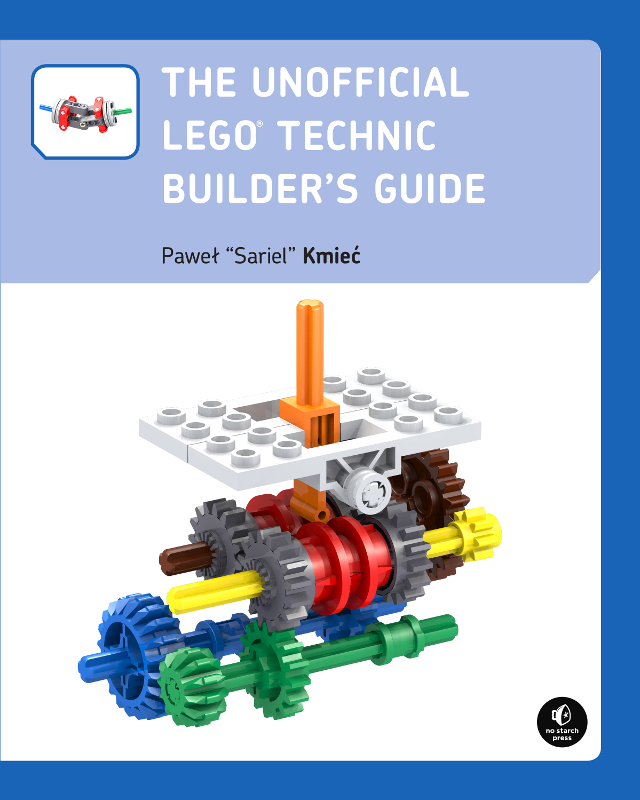
Unofficial LEGO Technic Builder's Guide by Paweł “Sariel” Kmieć, 2013, No Starch Press


On the one hand I might not be the right person to review this book. Even though I have fond memories of my best friend getting what must have been set 956 oh so many years ago, and at one point I got the Technic Jango Fett as part of a large eBay Star Wars LEGO lot, about the only thing I regularly do with Technic elements is put a small gear on a rod to make a mace for my castle minifigs. On the other hand, I'm pretty much the perfect market for this book, which is well situated for the builder who is fairly competent with LEGO building but has no real experience with Technic. That said, even the expert Technic builder would surely find this to be an extremely useful book. The author, Paweł “Sariel” Kmieć, is a well-known Technic builder. He's active in LUGPol and contributes to various Technic or NXT themed sites. You're quite likely to have seen some of his amazing MOCs on the Brothers Brick or other community sites, and you can find them all on his own site, Sariel.pl. Eric "Blakbird" Albrecht of Blakbird's Technicopedia is listed as a tech reviewer and advisor, and he may have helped with the illustrations, though that is not made clear.


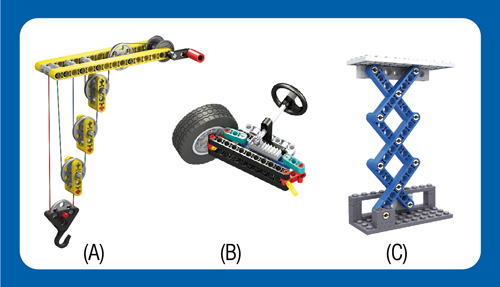
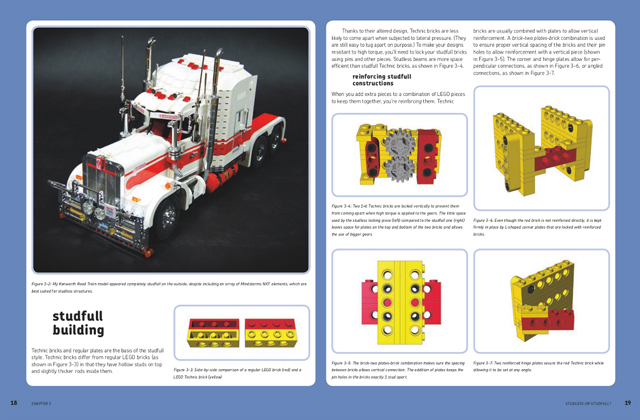
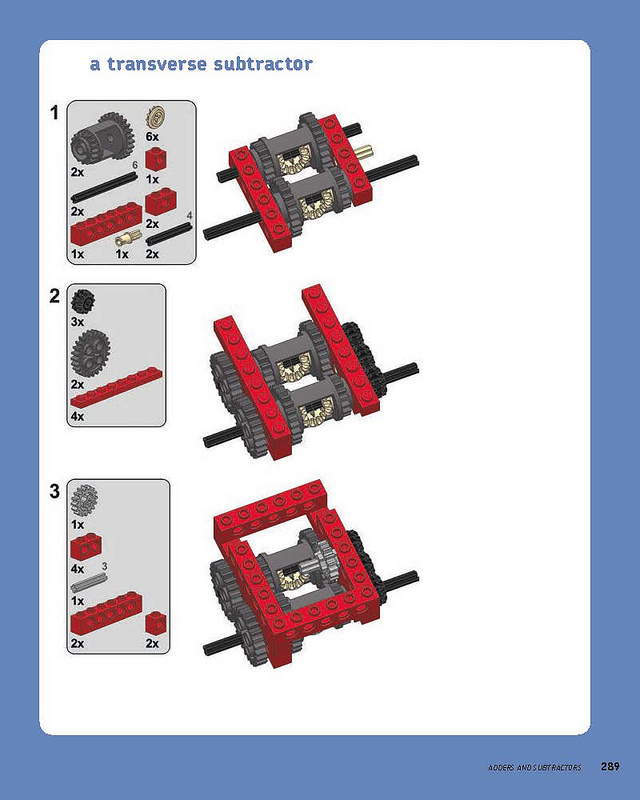
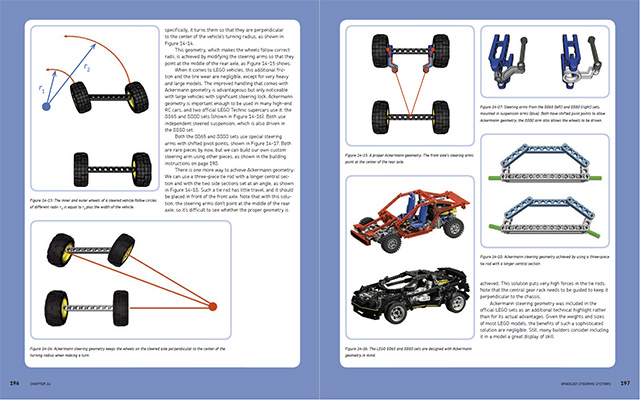
This book is a beautiful intro to Technic building. Almost every page is full of full color illustrations - some photos, but mostly LDRAW - that clearly illustrate the topics under consideration. Without a lot of fluff intro, Paweł jumps straight into a discussion of the basics of Technic building. He starts out with a quick introduction to concepts of physics and mechanics that underlie the complex creations, goes through a comprehensive discussion of different Technic elements and how they work, and by the end of the book works you through intricate mechanisms, such as a ten-speed synchronized transmission, or a heavy-duty pendular portal axle. The complete Table of Contents can be seen here. The writing style is very clear, so you don't have to start out as an expert car mechanic to enjoy this book (believe me - I barely know how to check my oil). Along the way Paweł includes a ton of information. For instance, he goes through every type of gear and shows how they work, or in another chapter he gives a complete description of the advantages and disadvantages of every LEGO motor.


There are a couple of things that are not in this book. There is virtually nothing about Mindstorms or Mindstorms NXT, which are often grouped in with other Technic building. I actually don't think that's a failing, as to try and fit in a lot about programming and robotics would have necessarily led to a watering down of the content that is in this book. Also, No Starch has several other Mindstorms NXT books, which makes me think that this is part of a strategic plan to make a library of great reference works. The other thing that this book is not about is finished models. Yes, Paweł has a ton of photos of beautiful finished trucks, tanks, cranes and other models to inspire you, but he's not out to provide step-by-step instructions to make these. Instead he gives you step-by-step instructions to make the drive train, or steering mechanism, or other mechanics 'under the skin'. You can then build your own skin on top of this solid skeleton. Again, other No Starch offerings, such as these Technic Idea Books might be good to explore as a next step.


I would highly, highly, highly recommend this book (highly even) for anyone above the very introductory level builder. If you've never made a Technic model before but want to try, Paweł clearly teaches you from the ground up. If you're an expert Technic builder, you'll benefit from the comprehensive listings of different parts, and be able to adapt the complex mechanisms Paweł describes. Even if you've never had an interest in Technic, and those funny beams and half pins that occasionally show up in your System sets make their way into your 'useless parts bin' only to show up as an occasional greeble, you'll be inspired by this. Now I want to go dig into my own bin and pull out some gears and axles to play with!


MinilandBricks-specific content None at all. I suppose the mechanics described here could be used in a MOC for any theme, but that part is up to you.

Wednesday, December 19, 2012

Book review: The Unofficial LEGO Builder's Guide, 2nd ed

Next in my series of book reviews as last minute presents for the AFOL in your life. I'm posting this same book review across most of my blogs, but I'm adding some blog-specific content at the end of each posting.


The Unofficial LEGO Builder's Guide, 2nd ed by Allan Bedford, 2013, No Starch Press.


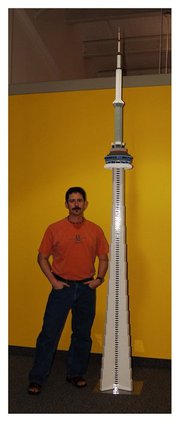
This book is by one of our own. Allan Bedford has been active in the LEGO community for a long time - his Lugnet postings go back to at least 1999. For about five years he maintained a blog, though it's dormant now. It seems that his online activity is now centered around his book's Facebook page. I think he's part of Torolug, though I don't see a list of members on their site. Allan's most ambitious LEGO project to date (aside from this book), is his 5000 piece replica of Toronto's CN Tower.


Anyway, back to the book. You may be familiar with the first edition of the Unofficial LEGO Builder's Guide, which came out in 2005. It's been revised and updated. I don't have the original on hand to compare, but I think the main change is that the illustrations have been redone and are now in color. I also note that newer elements have been added to the Brickopedia section (more on this below). Without a side-by-side comparison I don't know if there have been other changes to the text, though as I recall the original had the same chapters (please correct me if I'm wrong on this)
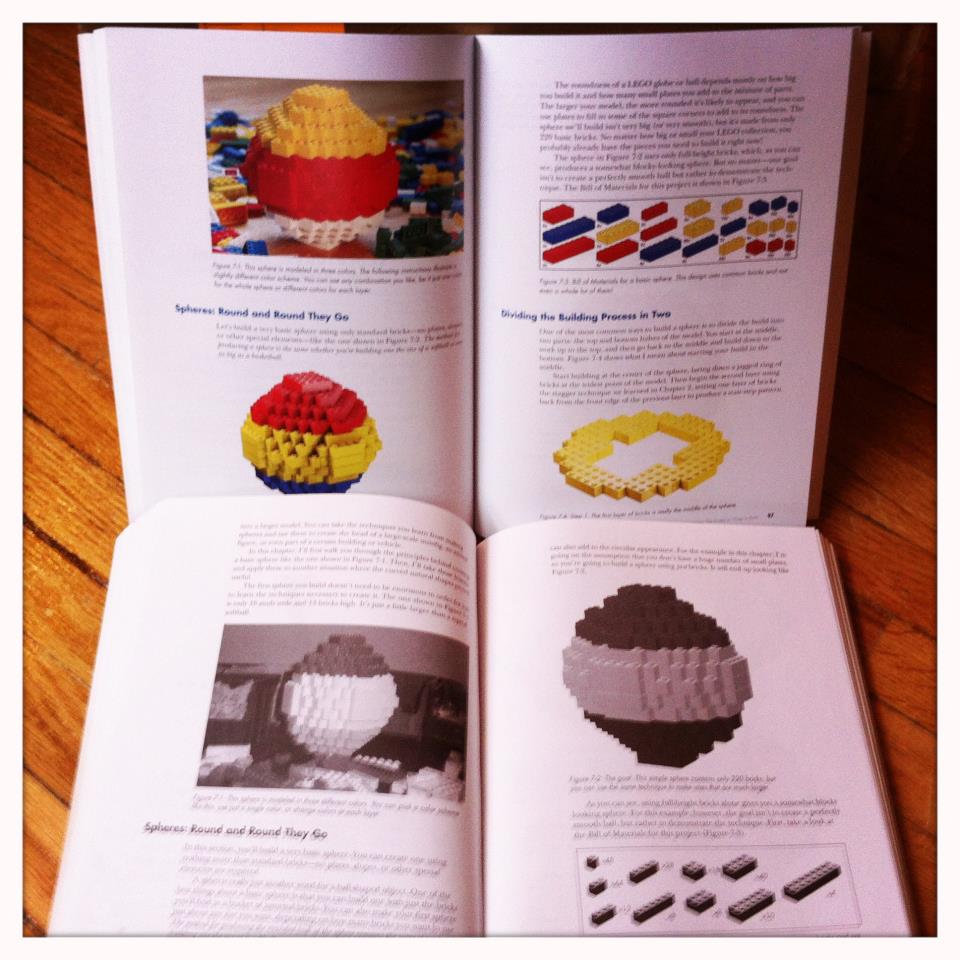


This book is written for someone who hasn't built many MOCs and wants to become an expert builder. This could be for a kid who wants to start building like an AFOL, or maybe for someone who has primarily collected official sets and now wants to move beyond the instructions. Even the experienced MOCer, though, can find new tips in these pages. The chapters tell you how to build well, including topics like choosing and designing a subject, simple tips to make your models more sturdy, discussions of scale, and creating round shapes out of square bricks.


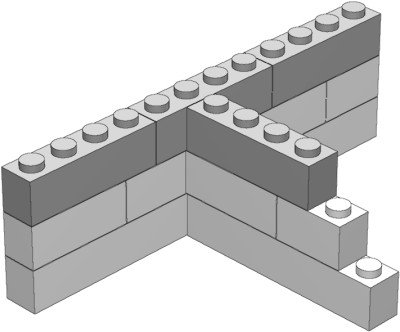
Here's a run through of the chapters. The LEGO System: Endless Possibilities, Back to the Basics: Tips and Techniques and Minifig Scale: Oh What a Wonderful Minifig World It Is! The first three chapters go through the basics, introducing bricks, studs and slopes; how they connect, tricks to make stronger walls, introducing curved walls, etc. He goes through the basic scale issues related to the ubiquitous minifig and gives directions to make a fig-scale train station. He even has a good discussion of making logical substitutions when you don't have exactly the right brick to use. Each chapter has a helpful summary of key lessons. One critique is that chapter two should have some discussion of SNOT building - there is some brief discussion later in the mosaic chapter, but it would be important to put in here. If Allan does a third edition I really hope he goes into more of this.


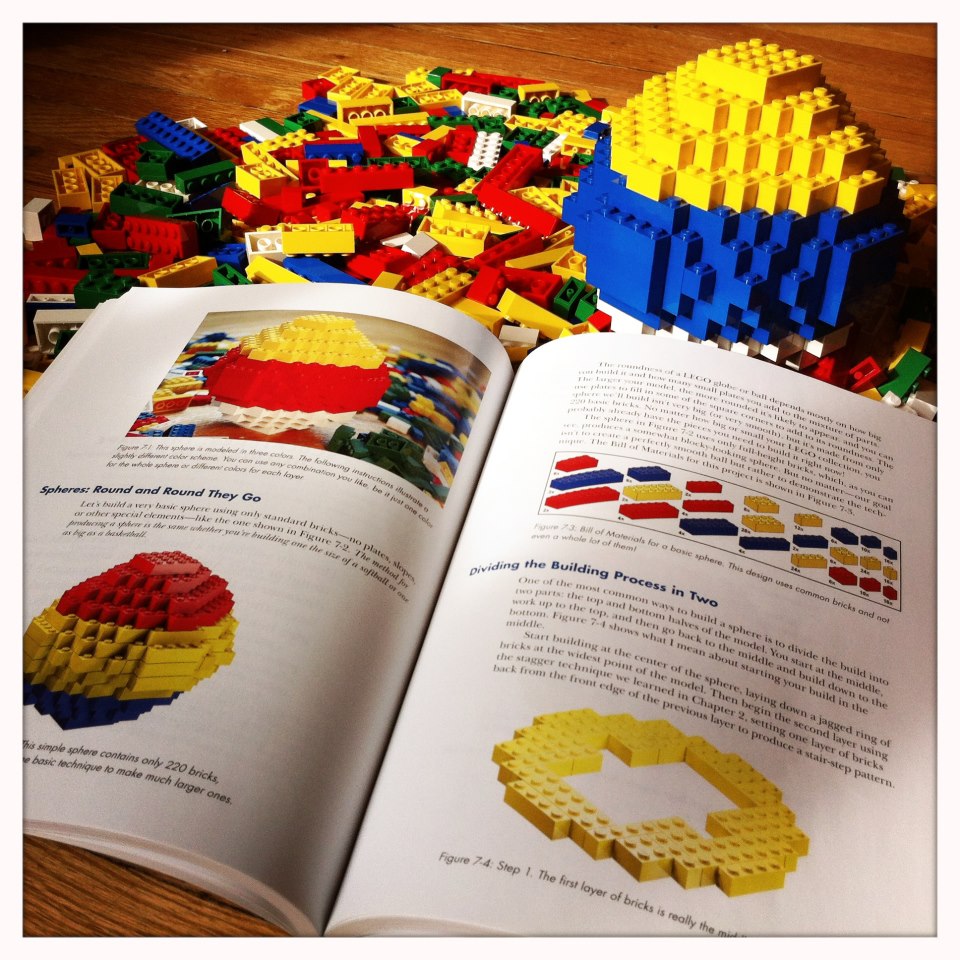
Miniland Scale: The Whole World in Miniature, Jumbo Elements: Building Bigger Bricks and Sculptures: The Shape of Things to Build. Chapters 4, 5 and 7 take us to scales larger than the minifig. His discussion of miniland building is very welcome, as this is overlooked in some other resources. He gives instructions to build a basic miniland figure, then shows how to make a diverse population by changing the clothes, poses, hair styles, etc. He also discusses making buildings for your minilanders. Jumbo Elements looks at a fairly niche area of building - those people who make giant size bricks or other elements out of LEGO. This chapter does have some good thoughts on the dimensions of the basic bricks even for those who are not into building gigantic elements. The sculpture chapter discusses making a round ball out of bricks and then goes into building a sculpture of the Sphinx. Here I note a critique based on the fact that Allan did not go back and change the text at all for this edition (presumably - again I do not have the first edition handy for a side-by-side comparison). I think any such guide written today would be lacking if it didn't include SNOT methods for getting rounded shapes. I'm especially thinking here of the Lowell sphere.
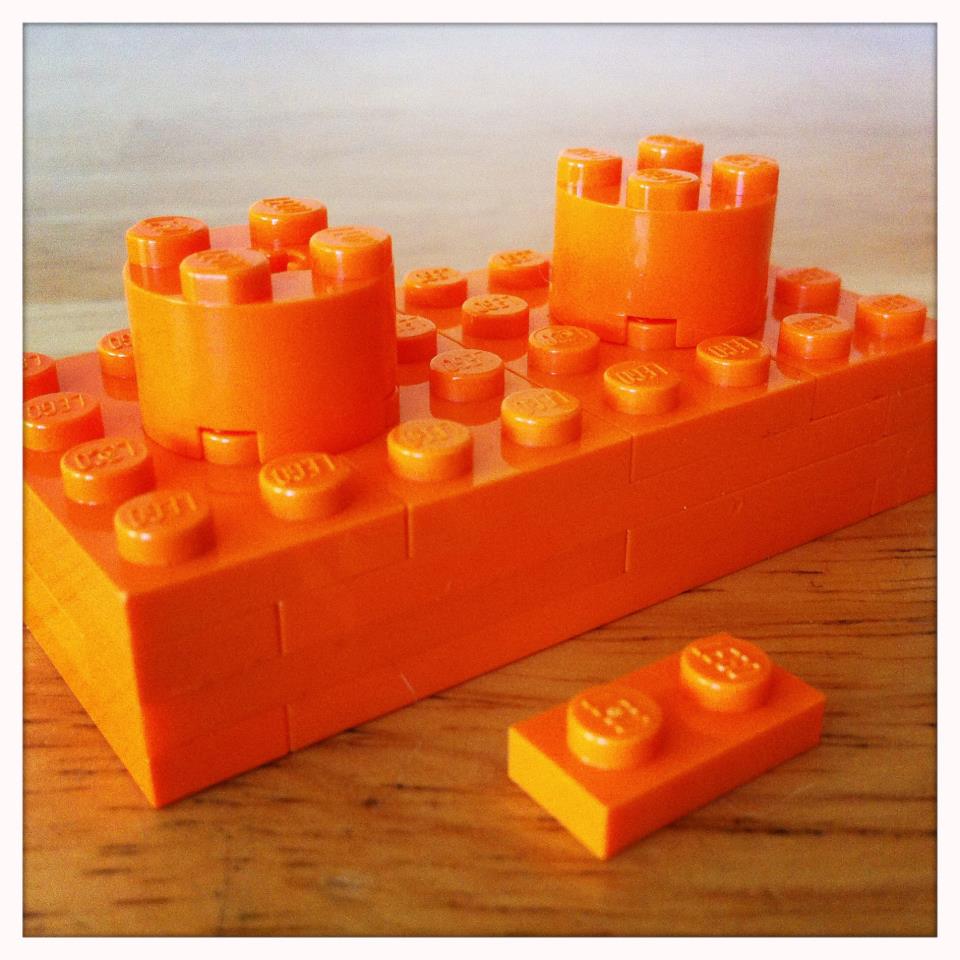


Microscale Building: More than Meets the Eye Chapter 6 goes through the basics of micro building, discussing the varying scales, compression of details, and gives instructions for building the Empire State Building. He also shows some great inspirational micro models such as a ship, a truck and a house. This whole chapter can be downloaded as a preview.



Mosaics: Patterns and Pictures in Bricks, Putting it All Together: Where Ideas Meet Bricks and Beyond Just Bricks: Other Ways to Enjoy the LEGO Hobby Chapters 8, 9 and 10 round out the book. Mosaics has a discussion of making mosaics two different ways (studs up and studs out). Putting it All Together goes through a building project from start to finish, including instructions for a Space Shuttle. Beyond Just Bricks addresses making your own building instructions and also building games out of LEGO. Of course LEGO builders have been making custom chess sets for a long time (I remember a version built by Suzanne Rich in the early days of Lugnet or even the rec.toys.lego days), but more recently LEGO has gotten in on the action with lots of brick-built games. It does seem like an updated edition of the book should have mentioned this last.
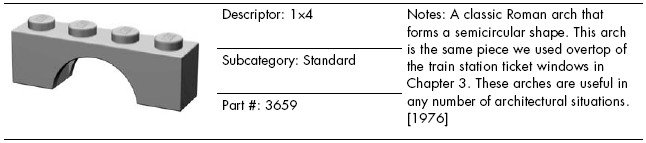


At the back there are two appendices. I'm not sure whether or not I think the Brickopedia, a guide to commonly used LEGO pieces, is particularly useful. It seems that you can get a lot more information on different LEGO elements by sending people to Peeron and BrickLink, but Allan does include some commentary on how each brick can be used. Design Grids: Building Better by Planning Ahead discusses using LEGO graph paper (both studs out and studs up version) in designing your MOCs. The text promises you can download this paper from the book website, but I have to admit that I cannot find it. It is, though, on Allan's older site.



In my opinion, this book is well worth buying for the beginning to intermediate MOC builder. The expert builder might still learn a few techniques, but probably knows the bulk of the material in this. On the other hand, expert AFOLs would probably be happy to get this to support one of our own and to encourage No Starch and other publishers to make more of this sort of thing. My only critique, as noted above, is that I think he should include more techniques, such as SNOT building.


MinilandBricks specific material - As discussed above, there is a great chapter on miniland building, including instructions on how to make a basic minilander and modify it to build a diverse population.
Tuesday, December 18, 2012

Book review: A Million Little Bricks

For your last minute Christmas gift needs for that LEGO fan in your life, I've got several LEGO-themed books to review. I'm going to copy these reviews across most of my blogs, though I'll put a little blog-specific information at the end of each posting.


A Million Little Bricks: The Unofficial Illustrated History of the LEGO Phenomenon by Sarah Herman, 2012, Skyhorse Publishing.


This is an interesting book, but it probably would have been better subtitled 'the barely unofficial history of the LEGO company'. Most of the book is devoted to a history of the company. We get, of course, a fairly standard description starting from Ole Kirk's wooden duck, to the invention of the interlocking brick, the building of Legoland, the minifigure, financial difficulties in the early 2000's, and the company today looking to the future. This is a great introduction to the company and well written, but if you've been around the LEGO hobby for some time this felt like a fairly well-worn path. I did learn a few new things - like there was a second Legoland park after Billund that opened in Sierksdorf, Germany, but closed after three years. Because of this failure, it was 20 more years before they opened additional parks. A big portion of the book is devoted to a history of the different themes. About three or four paragraphs are devoted to each of the different themes and subthemes. You get a little description of what is in that theme and what were the major sets. These are given in chronological order rather than thematic, so if you wanted to go through a history of all of the castle subthemes, for instance, you'd be flipping around a bit. For System sets this seems pretty comprehensive. I have to admit that I didn't go through a detailed comparison with the Brickset database, but with themes I know well Herman seems to have covered all of the subthemes, and I also note that fairly short-lived themes are covered.

The last chapter, 'Building Outside the Box', moves beyond the basic sets to discuss things like gear and video games (including noting the LEGO Universe MMO - this highlights the fact that the book is about a year out of date even though it came out fairly recently, also seen in the absence of recent themes like the Super Heroes and Tolkien themes). And then there are the 11 pages devoted to the fan community. We only see a handful of MOCs by three builders (Jordan's whaler and Rapunzel, Alex's Relativity and Inception and Nathan's self portrait, Yellow and untitled (I couldn't find that one on his site)). We get mentions of the Brothers-Brick, MOCpages, brickfilms, a rundown of some of the major fan conventions, and a brief interview with Nathan Sawaya.

In the end, I'd rate this book as okay. It is well written, and if someone wants to learn about the company it's a good place to start. The history of themes and subthemes is nice. Unfortunately, this book shows the main problem with any book that tries to be comprehensive about a very active subject - it's immediately out of date. As mentioned above, while this came out this fall, the information was well over a year old. For instance, the new Super Heroes themes were announced in mid-2011, but they get no mention. They note the 'upcoming' Florida Legoland, but not the one in Malaysia, which was surely under construction before this book was completed. The Lord of the Rings theme was mentioned in late 2011, and also gets no mention. I realize that editing and printing a book takes time, but perhaps that just shows the impossibility of a book such as this. The internet resources are immediately up to date, while any book is outdated by definition.

The coverage of the fan community is even more problematic. The subtitle promises a history of the LEGO phenomenon and we see a beautiful MOC (Jordan's Rapunzel tower) on the cover. Also, the book is being marketed towards the fan community. And yet this gets a mere eighteen pages and seven photos. It's impossible to do justice to all of the great MOCs out there, but some more could help show people the possibilities. I would suggest getting this book for someone who was interested in LEGO, but I would not bother getting it for a hard core AFOL.


MinilandBricks specific material - As noted above, there is a discussion of the various Legoland parks. Most of this is devoted to the original Billund park and then the Windsor park, with brief mentions of the California, Deutschland and Florida parks. They also mention that the parks are now run by Merlin Entertainment rather than LEGO. Herman discusses how the first park was inspired and built, and there are some photos from the parks (I think all from Billund).

Friday, December 7, 2012

With a corn cob pipe and a button nose

I'm going to say that Kristi McWii's snowman is pretty much miniland scale.


Wednesday, November 28, 2012

Taking the plunge

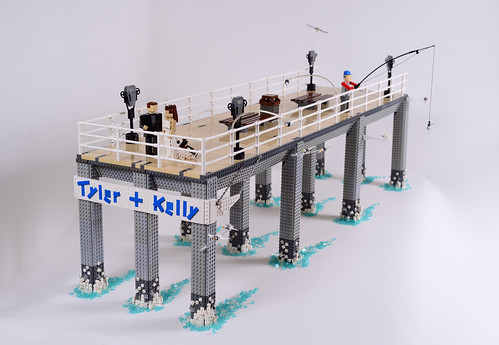
Carlmerriam built Tyler & Kelly's Pier for a friend's wedding.


Monday, November 26, 2012

Rum Diary

Lino made this car from the Rum Diary.


Monday, November 19, 2012

Sunday, November 18, 2012

Money for Nothing

Look at them yo-yos, that's the way you do it, ya build those LEGOs in Downtown Disney. Money for Nothing by Michael Zehr.


Friday, November 9, 2012

Colossal Castle Contest X

I know this doesn't specifically fit the topic of any of my various blogs, but I'm also one of the admins at Classic-Castle. I and the other admins at Classic-Castle would like to invite all members of the larger LEGO community to participate in our signature annual event, the Colossal Castle Contest. Our tenth CCC challenges builders with 14 categories ranging from the size of a custom minifig to a full castle covering multiple baseplates, so there's room for everyone to play. Please see the contest page and forum discussion for details.

Thursday, November 8, 2012

Book review: The Brick Bible: The New Testament

Note - I'm posting this book review across all of my blogs. I will add some blog-specific material at the end of the review where appropriate.

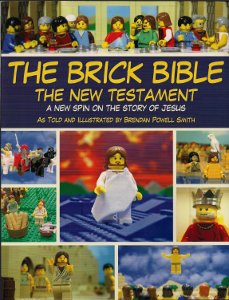
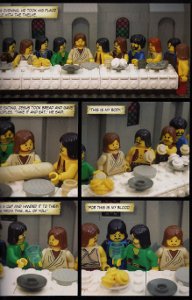
I was very happy to get my copy of Brendan Powell Smith's latest work The Brick Bible: The New Testament, published by Skyhorse Publishing. Those in the online LEGO community are probably already aware of Brendan's 11 year old ongoing project, the Brick Testament, in both its online and print incarnations. To you, all I really need to say is that this is a beautifully produced paperback version including many of his New Testament stories, presented in a graphic novel style. Several of the stories have been re-built and re-photographed to update the stories reflecting newer LEGO figures, elements and colors, as well as Brendan's evolving building skills over a decade of work. There is also a Kindle version, but IMO if you're going to look at this on a screen, you're just going to go straight to his website. The huge benefit of this is that you can actually hold it in your hands and flip through the pages.


For others, I suppose some further explanation is warranted. Back in the fall of 2001 Brendan showed off his initial work to the LEGO community:
Hello, all.
I have embarked on a mammoth new project: interpreting the Bible in LEGO. I have plans for both Old and New Testament stories, but decided to start from the very beginning. I present to you the first fruits of my labor, six stories from the book of Genesis.
Enjoy, -The Rev. Brendan Powell Smith

As he described it in that post, his Brick Testament is a LEGO illustration of the Bible. He immediately got a lot of feedback from the community, and as he added content to his site, he also got noticed by the mainstream press with newspaper and magazine stories, appearances on radio and television, and countless blog posts, tweets, forum discussions and the like (and one notable two part interview ;) ). Over the years, his work has led to at least seven print versions.

Brendan's work has not gone free of controversy. He is not personally a religious man, and one of his stated goals is to get people to reexamine the Bible, not just their vaguely-remembered Sunday School story version. He just takes the raw text and illustrates it in a pretty literal way. I won't do this here, but elsewhere (on Lugnet and on my GodBricks blog) I've taken issues with some of his interpretive choices. Brendan has always been gracious to discuss these differences, and I've enjoyed conversations with him over the years. Also, as he noted even in his first posting back in 2001, the Bible is full of violence and sex, and he has never shied away from illustrating this in LEGO form in the online version of his work. A year ago there was a little tempest in a tea pot when Sam's Club removed his books from their shelves due to complaints over that. I have elsewhere mocked that decision, but I do want to note here for anyone considering purchasing the Brick Bible for their kids, there are no plastic toy figures placed near each other in such a way as to suggest sexual situations in the print version (plastic toy violence is another thing altogether). So, if you are highly offended by plastic toy figures placed near each other in such a way as to suggest sexual situations (PTFPNEOISAWATSSS for short), have no fear. You can buy this book in peace. Now, if you are more concerned that his interpretation of certain Bible passages doesn't match yours, well, I may share your view, but that would also mean that you have to also keep a close eye on every other Biblical interpretation in popular media from Charlton Heston parting the Red Sea on to animated vegetables singing silly songs. The key is just to be an intelligent reader, and, if you are buying this for your kids, read along with them and discuss the stories.


Now, I should spend a few minutes on this book, specifically. In large part it covers the same ground that you can find on his website, though with a different format (i.e. the website has single photos with text underneath, while this book version is laid out like a graphic novel, as you can see above). Several of the stories have been re-built and re-photographed (though not all - for example at one point the Magi are riding brick-built camels and at another Jesus tells how it is easier for a molded camel to go through the eye of the needle, so presumably the Magi photo is from before LEGO first produced the camel element in 2010). One striking difference is the lack of speech bubbles.

In the web version, Brendan uses black text in speech bubbles to indicate direct quotes from the Bible, but he sometimes has the characters make humorous asides, indicated by gray text. I kind of miss the speech bubbles and the side jokes, but I think I understand why Brendan did not include those in this. The other discrepancy between the print and web versions is simply in the choice of which material to include. Over half of the book is devoted to stories from the life of Jesus, which seems appropriate, but it seems that a third of the pages devoted to the book of Revelations seems out of scale. What's left on the cutting room floor is Brendan's treatment of the epistles of Paul, which are some of my favorite of his work.

That said, I highly recommend you get this book. Both religious and non-religious readers will enjoy the presentation. LEGO builders will particularly enjoy and appreciate seeing how Brendan translated different scenes into brick form.
MinilandBricks-specific content - Pretty much none. I suppose you could stretch it and say that his Statue of Liberty is roughly miniland scale.

Tuesday, November 6, 2012

Thinker

Lego Builders made this version of the Thinker.


Monday, November 5, 2012

London taxi

Ralph Savelsberg made this great taxi.


Wednesday, October 31, 2012

Tuesday, October 30, 2012

Hi, Georgie

Leda Kat's Hi, Georgie from It is just in time for Halloween.


Thursday, October 25, 2012

Figs

M.R. Yoder is working on a larger miniland project and he's teasing us with some figs.


Friday, October 19, 2012

Dancers

These dancers were built at BrickCon by Bill Vollbrecht. I'm assuming from Mariann's pictures that there was a contest where participants had to come up with a MOC based on the pieces in set 6914, Prehistoric Hunters.


Thursday, October 18, 2012

Meet Anic

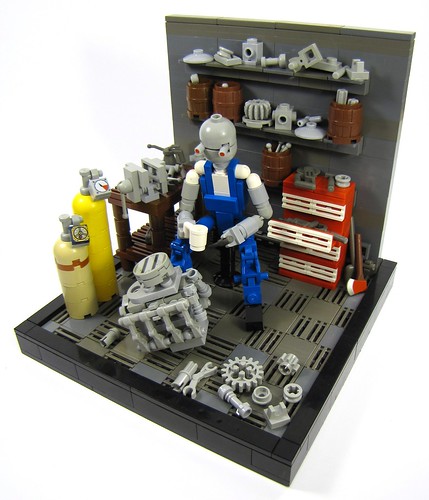
He's a mech, by Chris Maddison.


Monday, October 15, 2012

Cake toppers

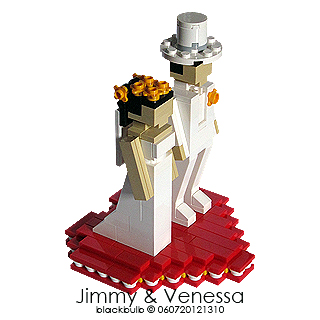
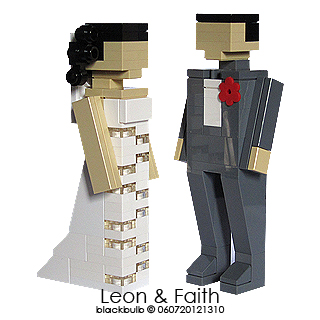
Blackbulb has made some custom cake toppers as wedding gifts.


Friday, October 12, 2012

Heikki and Kaija

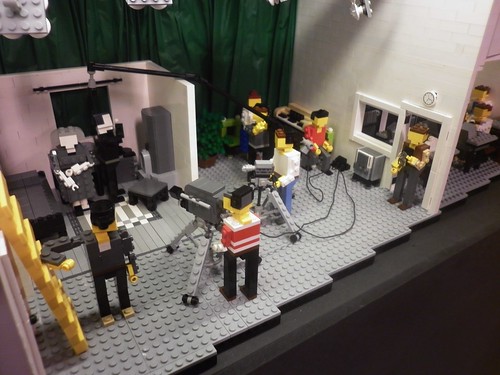
InfamousQ made a display looking back at the filming of Heikki and Kaija, one of the most popular Finnish TV shows in the '60's. This will be on display at the Rupriikki Media Museum in Tampere, Finland.